
Jago88win.art Football Guide to Evaluating Late-Match Scoring Pressure for Smarter Bets
You have watched a match for eighty-five minutes, your bet is looking solid, and then one defensive lapse changes everything. A late goal wipes out your margin, your accumulator collapses, and you are left wondering why you did not see it coming. This is the most frustrating pattern in football betting. Most bettors focus on the first half or the full match, but the final ten minutes often carry a completely different dynamic. If you have ever lost a bet because of stoppage-time drama, this Jago88win.art football guide to evaluating late-match scoring pressure will give you a practical way to read those closing minutes before you place your next wager.
Quick Answer: How to Read Late-Match Scoring Pressure in Three Steps
Before diving into the full walkthrough, here is the short version you can apply immediately:
- Check the match state. Look at the scoreline, the remaining minutes, and what each team actually needs from this result.
- Watch for tactical shifts. A trailing team that is pushing bodies forward creates more late chances, but also leaves space. A leading team that drops deep invites sustained pressure.
- Compare live momentum. Which team has had the clearer chances since the sixtieth minute? Late pressure rarely comes from nowhere. It usually builds over a fifteen-minute window.
You do not need complex algorithms for this. You just need to read the situation with clear eyes. The rest of this guide explains each step in detail and shows you how to avoid common mistakes when you evaluate late-match pressure.
 Hình minh hoạ: Trang chủ go8
Step 1: Read the Scoreline and the Time Remaining Together
Many bettors make the mistake of looking at the scoreline in isolation. A 1–0 home lead in the seventy-eighth minute means something very different depending on whether the match is a league fixture, a cup tie, or a relegation battle. The same scoreline can produce completely different late-game behavior.
When the home team is winning by one goal and the away team has nothing to lose, the away side will likely throw more players forward. This is not a theory; it is a natural response to the match situation. The trailing team must chase the game because a draw still may not be enough for their objective. You should ask yourself a simple question: does the losing team urgently need a goal, or would a draw actually satisfy them? The answer changes the intensity of late pressure.
Also consider the time remaining honestly. A goal in the seventieth minute leaves twenty minutes of open play, which is a long time. A goal in the eighty-eighth minute leaves very little room for a response. The closer you get to full time, the more you should weight the quality of the chance over the quantity of possession. A team can dominate the ball for two minutes and still create nothing, while a single counter-attack in the ninety-first minute can end the match.
One practical tip: write down the scoreline and the minute before you even look at any other data. This forces you to think about the match state first. If you are following a live match on a platform linked through the Trang chủ go8, you can see the minute and scoreline clearly, but the principle applies no matter where you watch. Once you have that baseline, move to the next step.

Step 2: Identify Tactical Shifts and Substitutions
Late-match scoring pressure is almost always a product of tactical intentions, not random events. A coach who brings on an extra striker in the sixtieth minute is sending a signal. A coach who replaces a winger with a defensive midfielder is sending the opposite signal. When you evaluate pressure, you must watch the bench as much as the ball.
Here are the tactical patterns that matter most in the final twenty minutes:
- The trailing team switches to a back three or pushes full-backs high. This increases crossing volume and creates second-ball situations near the box.
- The leading team drops into a low block. This invites pressure, but it also means the defending team will clear the ball long, which can create counter-attacks.
- Late substitutions for fresh legs. A tired defense facing a fresh winger is a major warning sign for late scoring pressure.
- Yellow card accumulation. A defender on a booking will avoid risky tackles, which reduces their ability to stop late attacks.
- Keeper involvement. If the trailing team’s goalkeeper is coming up for corner kicks, you are seeing desperation, not structured pressure.
These signals are not guaranteed to produce a goal, but they change the probability landscape. A team that is making attacking substitutions and pushing full-backs high is more likely to concede a goal on the counter, and also more likely to score themselves. That is why late-match pressure evaluation is not just about predicting a goal; it is about predicting which type of goal is more likely.
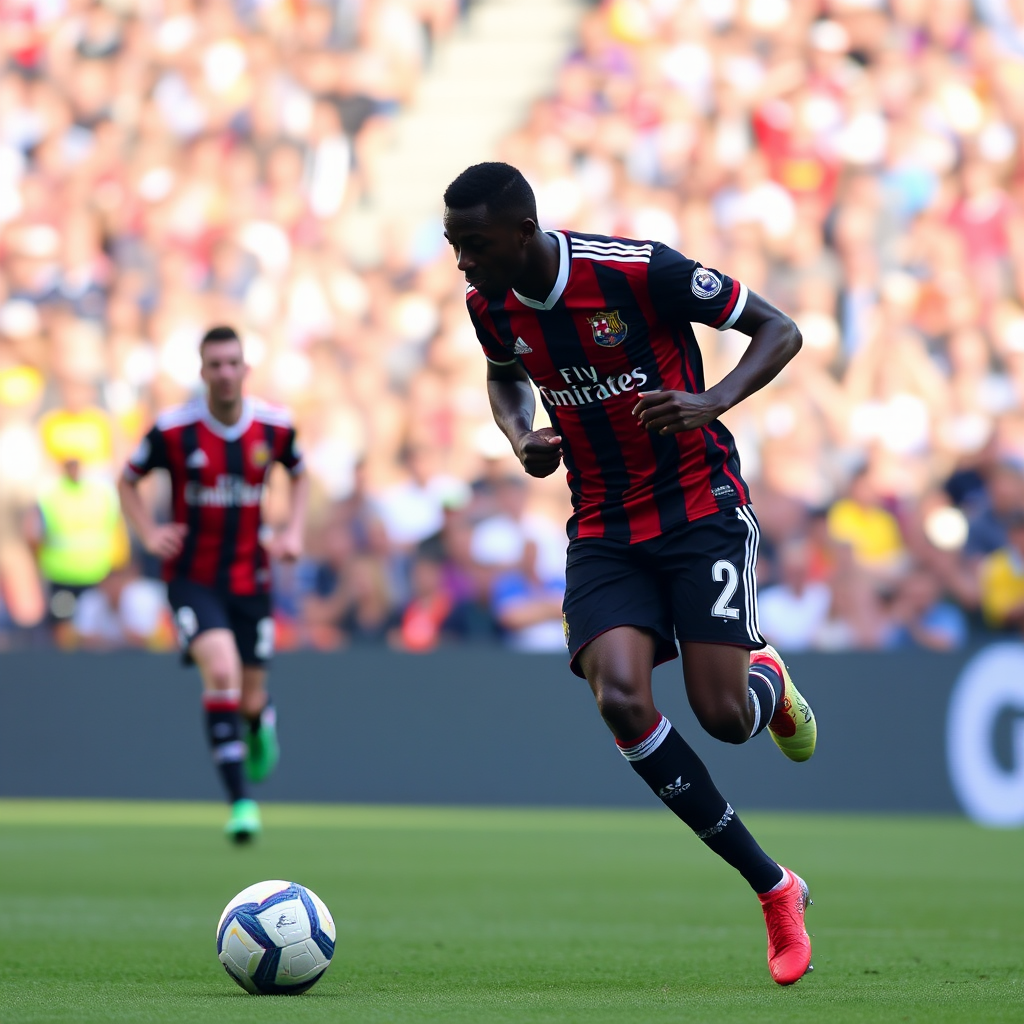
Step 3: Measure the Momentum Shift Since the 60th Minute
Pressure in the last ten minutes rarely appears out of thin air. It builds. If you want to evaluate late-match scoring pressure accurately, you should track what has happened since the sixtieth minute. Look at these indicators:
- Which team has had more shots on target?
- Which team has been winning more corners and free kicks in dangerous areas?
- Is the attacking team moving the ball forward with purpose, or just passing sideways?
- Are the defenders clearing the ball aimlessly, or starting controlled attacks?
- Has the tempo increased or stayed flat?
If one team has been camped in the opponent’s half for the last ten minutes, the probability of a late goal is significantly higher than if the game is end-to-end. You should also pay attention to the body language of players. Defenders who are shouting at each other, looking at the bench, or making desperate clearances are showing signs of pressure. Players who are calmly passing out of the back are showing composure. This is not a scientific measurement, but it is a useful practical signal.
When I evaluate late pressure, I like to imagine I am a spectator who walked into the stadium at the sixtieth minute. What would I think is happening? Would I say that Team A is chasing the game, or that Team B is comfortable? This mental exercise filters out the bias you might have built from watching the earlier part of the match. It helps you see the current reality instead of your pre-match expectation.

Why Evaluating Late-Match Pressure Matters for Bets Like Over/Under and Both Teams to Score
Late-match scoring pressure has a direct impact on several popular bet types. If you are betting on over 2.5 goals, a scoreline of 2–0 in the seventieth minute might seem safe, but a trailing team that is pushing forward can turn that into a 2–1 or 2–2 finish. If you are betting on both teams to score (BTTS), late pressure is often the deciding factor because a trailing team will take more risks in the closing minutes.
On the other hand, if you are betting on under goals, you need to identify when late pressure is likely to be absent. A match where both teams are satisfied with a draw, or where the leading team is controlling possession without taking risks, has a much lower chance of late scoring. You should evaluate not just the pressure itself, but the likelihood that the pressure will produce a goal. Desperation alone does not guarantee a result. A team that launches long balls into the box against a tall, organized defense can create pressure without creating clear chances.
This is where the concept of quality over quantity becomes essential. Late pressure that produces crosses from wide areas against a well-positioned defense is less dangerous than late pressure that produces through balls and one-on-one chances. When you watch the closing minutes, focus on the type of chances being created, not just the amount of territory being gained.
Step 4: Check Team Motivation and Tournament Context
You cannot evaluate late-match scoring pressure purely through tactical analysis. Motivation plays a huge role. A team that needs a win to avoid relegation will push harder in the final minutes than a mid-table team that is already safe. A team that is playing in the second leg of a cup tie approaches stoppage time differently than a team in a league match.
Consider these scenarios:
- A team winning 1–0 away in a cup match may defend desperately to protect the result.
- A team drawing 0–0 in a must-win match will throw everyone forward in the final ten minutes.
- A team playing for a point in a title race will be cautious, even if the crowd is pushing for more.
- A team that has already qualified for the next stage of a tournament may lose intensity.
Each of these situations changes the pressure profile. The same scoreline at the same minute can produce completely different late-match behavior depending on what is at stake. This is why you should never rely solely on statistics when evaluating late scoring pressure. The numbers tell you what has happened, but the match context tells you what is likely to happen next.
Another important factor is the historical record of the teams involved. Some teams have a reputation for scoring late goals because of their fitness levels, while others are known for conceding late goals due to defensive fatigue. These tendencies are not fixed, but they can be useful as a secondary signal. If you have access to team-specific data about goals scored and conceded in the last fifteen minutes of matches, use it as a supporting indicator, not as a guaranteed prediction.
Step 5: Combine Your Observations Into a Clear Judgment
After you have examined the scoreline, the tactical shifts, the momentum, and the motivation, you need to make a judgment. This judgment should be one of three things:
- High pressure: The trailing team is pushing hard, creating good chances, and the leading team is struggling to relieve pressure.
- Moderate pressure: The trailing team is committing players forward, but without creating clear chances, or the leading team is defending confidently.
- Low pressure: Both teams are comfortable with the current scoreline, or the attacking team is not taking risks.
This simple categorization helps you decide how to approach the market. In a high-pressure situation, you might lean toward over goals or BTTS if the odds are right. In a low-pressure situation, you might lean toward under goals or avoid the market entirely. The key is to avoid forcing a bet when you do not have a clear read.
You should also set a personal rule about timing. Late-match pressure can change very quickly, especially after a goal or a major substitution. If you place a bet in the eightieth minute and then the leading team scores, the entire pressure dynamic shifts. That is why it is often wiser to wait until you see the first wave of substitutions before you commit. The French phrase “after the hour, the game changes” captures this well, but you do not need to speak the language to understand the principle.
Practical Example: Reading a 1–1 Draw in the 80th Minute
Let me walk you through a concrete example to show how this framework works in practice. Imagine a match between a home team that needs a win to qualify for a playoff spot and an away team that has already secured their objective. The score is 1–1 with eighty minutes played.
Step 1 tells you the home team needs the goal more, so they will push forward. Step 2 tells you to watch the substitutions. If the home coach has just brought on an attacking winger and a second striker, that is a clear signal. Step 3 tells you to look at the last ten minutes. If the home team has won four corners and forced two saves, the momentum is with them. Step 4 tells you that the away team may not be fully motivated because their objective is already secured.
All of these observations point to high late scoring pressure. The home team is likely to create chances, but the away team may also find space on the counter-attack because the home team is committing bodies forward. This is exactly the kind of situation where late goals become more likely. You could reasonably consider over 2.5 goals or BTTS in this scenario, though you should always check the odds to see if the value is still there.
Now imagine the same scoreline and the same minute, but the home team is already safe and the away team is fighting for a draw to stay up. The exact same observations would lead to a completely different conclusion. The away team would be the one pushing forward, but they would also be more cautious because a losing goal would be disastrous. The pressure profile is different, and your bet should be different too.
Risk Management Tips for Late-Match Bets
Even the best late-match pressure evaluation will not be right every time. Football is a low-scoring sport with a huge amount of variance. A single deflection, a controversial penalty, or a defensive error can overturn any analysis. That is why risk management is not an optional addition; it is the foundation of sustainable betting.
Here are the risk rules I recommend for anyone applying this framework:
- Set a fixed stake for live bets. Late-match bets are riskier than pre-match bets because the odds are constantly changing and the information window is small. Use a smaller stake for live wagers than for pre-match wagers.
- Never chase a loss with another bet. If your late-match read was wrong, accept the loss and move to the next match. Increasing your stake to recover losses is one of the fastest ways to damage your bankroll.
- Only bet what you can afford to lose. This may sound like a cliché, but it is the most important rule. No bet is worth financial stress.
- Check the updated odds before placing a bet. The odds quickly reflect new information. If the probability of a goal has already been priced in, the value may be gone.
- Avoid betting on events you cannot watch live. If you are only looking at text updates, you will miss the body language and tactical signals that make this framework effective.
You should also remember that bookmakers employ teams of analysts who set live odds based on sophisticated models. You are not trying to outsmart the market on every single bet. Instead, you are looking for spots where the market has not fully adjusted to a notable tactical shift, such as a surprising substitution or a sudden change in motivation. These edges are small and fleeting, so you need to be disciplined about not over-betting.
For anyone using an online betting platform, it makes sense to review the live betting interface carefully. When you navigate through thể thao go8, you will see the available markets and odds structures for live football. Before you place any bet, make sure you understand how the platform displays the current minute, the scoreline, and the live odds. Knowing exactly where to find this information will help you react quickly when you identify a late-pressure situation.
Using Related Stats Without Overloading Your Decision
There is a temptation to load up every statistical indicator before making a live bet. The truth is that in the final minutes of a match, you do not have time to process a dozen data points. The most effective live bettors use a very small set of indicators and use them consistently. They avoid the paralysis of analysis.
I suggest focusing on three numbers above all others: the current minute, the scoreline, and the number of shots on target in the last ten minutes. These three numbers, combined with your own reading of the tactical situation, give you most of the information you need. If you want to add one more layer, look at the expected goals (xG) data if your platform provides it. But do not let xG override your direct observation of the match. A team can have a high xG from long-range shots, while another team can have a low xG from a few high-quality one-on-one chances. In late-match pressure, the quality of chances matters more than the total volume.
Also remember that late-match pressure evaluation works differently across leagues. Some leagues have a higher average number of goals in the final fifteen minutes due to their overall style of play. Other leagues are more conservative, and late goals are rarer. You should apply this guide with an awareness of the league you are betting on. A tactical framework that works in a high-tempo league may not translate perfectly to a more defensive league.
Recommendations by Reader Group
Different bettors need different takeaways from this guide. Here is how I would apply the framework depending on your experience level and your goals.
For Beginners: Start with Observation, Not Action
If you are new to evaluating late-match scoring pressure, your first job is not to make money. Your first job is to build a mental model of how matches end. For the next ten matches you watch, do not place a bet. Instead, use this framework to predict whether a late goal will occur, then check your prediction against reality. Keep a simple note on your phone: the match, the minute you evaluated, your prediction, and the actual outcome. After ten matches, you will start to see patterns in your own judgment. You will also see where you tend to make mistakes. Once you have that baseline, you can start betting with small stakes. Also, always check the live betting rules on your platform and ensure you know how payouts work for settled markets.
For Intermediate Bettors: Combine Pressure Reading with Bankroll Discipline
If you already have some betting experience, you can use this framework to refine your live betting strategy. The main advantage you have over beginners is that you already understand odds and value. Your focus should be on discipline. Set a weekly loss limit for live bets and stick to it. When you identify a high-pressure situation, check the odds first. If the over 2.5 goals market is priced at 1.10, that is not value, no matter how strong the pressure looks. You need to find a balance between the probability you have assessed and the odds being offered. Save your best bets for situations where the odds seem fair or slightly generous relative to your pressure reading. Remember that comfort with risk is not the same as recklessness. You can miss a bet and still be a smart bettor.
For Advanced Bettors: Use This Framework to Find Market Inefficiencies
Experienced bettors should treat this guide not as a rulebook, but as a filter for spotting opportunities that the market has mispriced. For example, if a leading team just received a red card, the market will quickly adjust the odds, but the adjustment may not account for the specific defensive structure that remains. If you can read that the ten-man team is still defending well, you might find value in under goals. The late-match pressure evaluation is most powerful when you combine it with a deep understanding of a specific league or a specific set of teams. You should track the results of your live bets over time to see if your pressure reading is actually providing an edge. If the edge is not there, adjust the size of your bets or the markets you are using.
Selected FAQ on Late-Match Scoring Pressure
How many minutes before the end should I start evaluating late pressure?
A useful starting point is the eightieth minute. By this time, the key substitutions have usually been made, and the body language of the teams is clear. If the match is highly tense, you may want to start earlier, around the seventy-fifth minute. If you are looking at a match where both teams are comfortable, starting later is fine because the pressure may never build.
Is it better to bet on over/under goals or on live match results in the late stages?
This depends on your confidence and the odds available. Over/under goals are often easier to evaluate in the late stages because pressure directly affects the probability of another goal. Match result bets can be tricky because a late equalizer changes the outcome completely, and the odds may be very short. I generally prefer over/under goals or BTTS when I see strong late pressure, because these markets are directly tied to scoring events.
What is the biggest mistake bettors make with late-match pressure?
The biggest mistake is confusing activity with effectiveness. A team can push every player forward and create a flurry of crosses without ever producing a clear chance. Bettors see the frenetic activity and assume a goal is coming, but the defense may be comfortable dealing with those crosses. Always watch the quality of the chances, not just the volume. The second biggest mistake is betting too large on live markets. Because the odds change quickly, emotions run high, and a single goal changes everything. Smaller stakes give you the room to be wrong without erasing your bankroll.
Can I use this guide for all football leagues?
Yes, but with adaptation. You should research the typical behavior of teams in the specific league you are betting on. Some leagues have more stoppage-time goals on average, while others are more predictable. The framework will always help you organize what you see, but the probability thresholds you use should be adjusted to league norms and your own historical results.
Evaluating late-match scoring pressure is a skill that improves with practice, honest review of your mistakes, and disciplined staking. No guide can guarantee a winning bet because football will always contain randomness. But if you apply the steps in this framework consistently, you will stop being surprised by late goals. You will start seeing them coming. That awareness alone makes you a more careful bettor, and careful bettors protect their bankroll and their sanity better than anyone else.